Summer break is coming to an end.
As we wrap up the remaining days, I’ve been reflecting on our recent vacations.
For many families, vacation means letting go of routines, trying new foods, and embracing spontaneity.
For us, vacation means creating predictability out of chaos, finding peace in unfamiliar places, and accepting that joy may look different—and that’s okay.
We take the same two trips every year: Mackinac Island, MI, and the Cranston family beach house in Connecticut.
Mackinac Island
Mackinac Island is as whimsical as it gets—no cars, horse-drawn carriages, and fudge shops on every corner. It sounds like a dream.
But when you’re traveling with a child like Courtney—who has severe autism, is minimally verbal, not potty trained, and experiences intense sensory needs—you don’t step into that dream. You create your own version of it.
We go into this trip every year expecting the worst but hoping for the best. Some challenges are predictable: eating dinner separately, with one of us staying in the room with Courtney while the other parent eats; missing activities we’d hoped to enjoy as a family; or watching Alyssa take a carriage ride with Joe while I stayed behind with Courtney, knowing she couldn’t handle that particular outing.
Those moments sting quietly. They remind us that even on vacation, we can’t step away from the caregiving, the advocacy, the constant mental load.
And yet—there’s still magic. Especially when princesses and superheroes are involved.
Courtney lit up when she saw them, asking for each by name—something she doesn’t often do. She hugged Elsa without hesitation. The princesses came to her gently, offering their hands, crouching low, meeting her exactly where she was—no pressure, just presence. Those outstretched hands felt like everything we try to give her every single day: an invitation to join the world without needing to change who she is.
We didn’t do everything on Mackinac Island. We didn’t need to.
We did what worked for both Courtney and Alyssa, and in the process, we made memories that matter.
The Connecticut Beach House
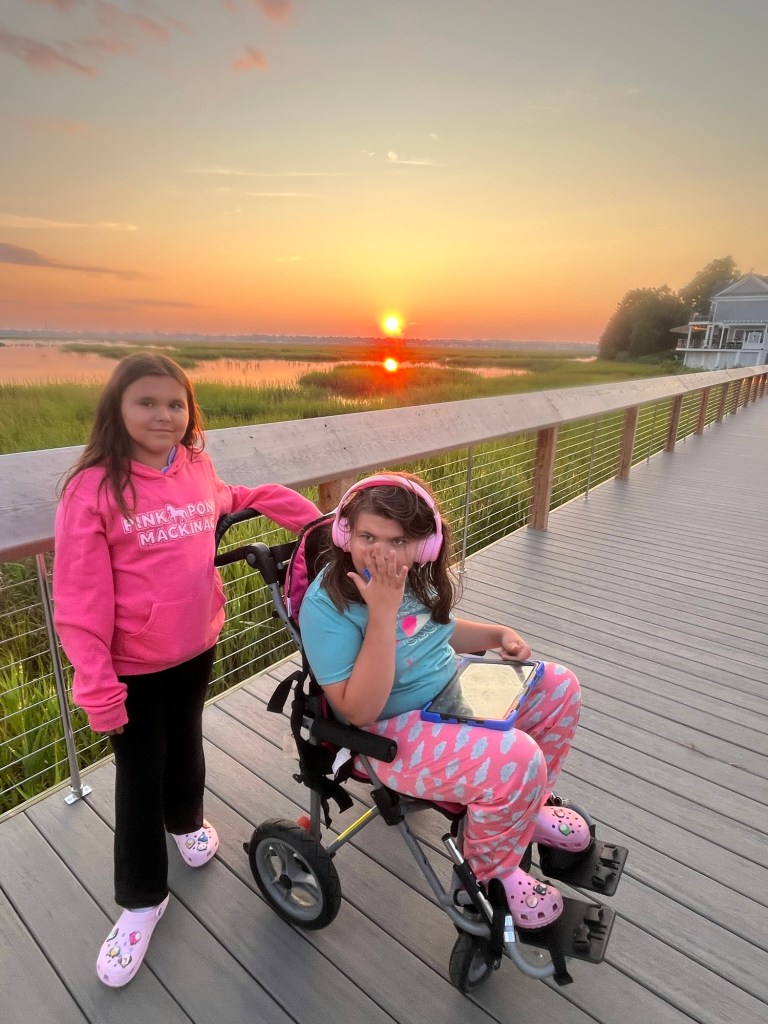
As we do every year, we ended our summer at the Cranston family beach house in Connecticut—a place that feels like a second home. No strangers. No big crowds. Just space to be ourselves.
At the start of the week, Courtney loved playing in the wet sand at low tide. She spent hours digging, feeling the textures, letting the waves wash over her feet. She was calm. She was joyful. She was in heaven.
And then—like so many things with autism—it changed.
After a few days, she no longer wanted to go to the beach. We tried other outings, like family dinners out, but she grew frustrated quickly, wanting to return to the comfort of the cottage—only to then be frustrated there because of the lack of cell service for her greatest coping tool: YouTube.
So, we adjusted. Just like in Mackinac, we split up at times. Joe and Alyssa would go to dinner with his parents while Courtney and I stayed back. It’s not what most people picture when they think “family vacation,” but it’s what works for us.
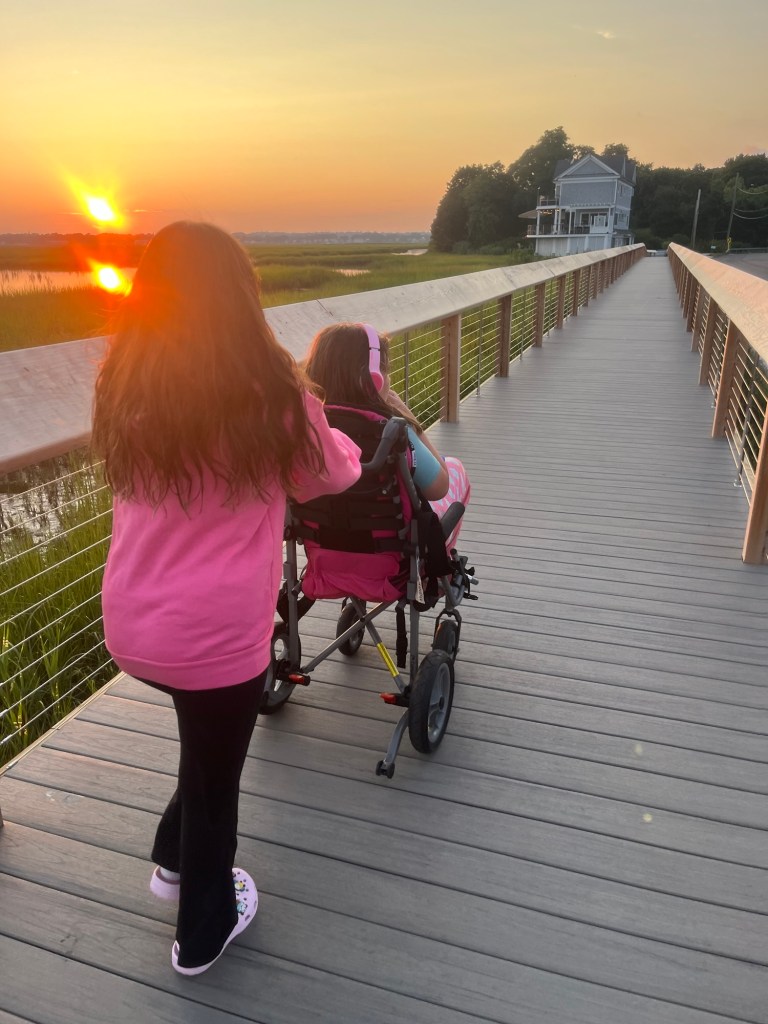
We found joy in the smaller moments—watching Alyssa meet Courtney where she was, without expectations. Courtney even began asking Alyssa for hugs and tickles, using her voice and gestures to seek connection. Those moments kept our hearts full, even on the harder days.
So what does does vacation look like for us?
Vacationing with a child with severe autism means redefining what “fun” and “relaxing” look like.
It means letting go of the fantasy and embracing our version of reality—messy, beautiful, unpredictable, and real.




 Autism: A Little Wild